Lesbian Space Princess Ending Explained
Lesbian Space Princess ends not with a big battle, but with a quiet victory: Princess Saira learns to love herself, and the film's villains learn that they never needed the "chick magnet" at all. Here's the full breakdown of what happens, what it means, and what the credits reveal.
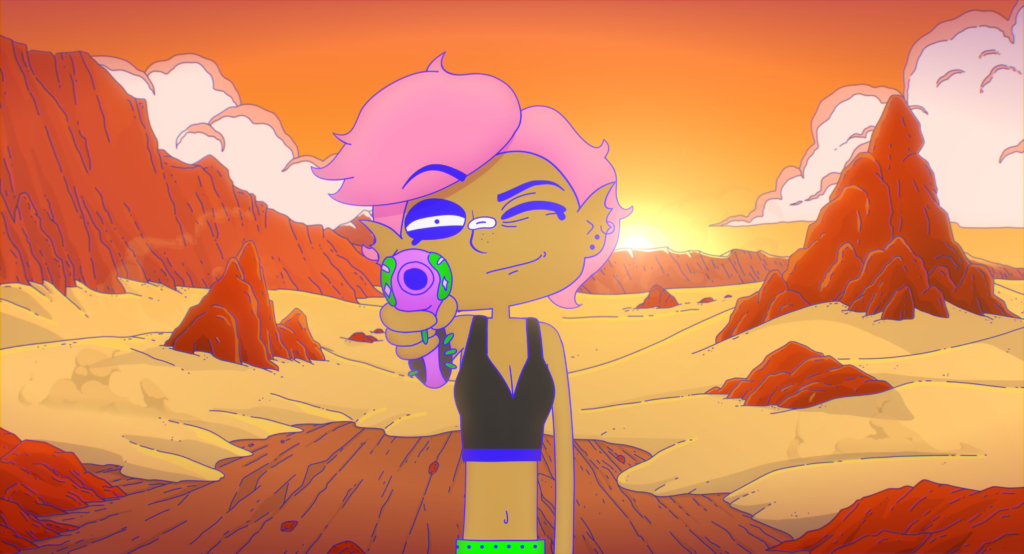
The Ending in 60 Seconds
Saira reaches the Straight White Maliens' planet and gives them her labrys to free Kiki. Kiki refuses to get back together with her. Saira's self-doubt makes the labrys dematerialise — because the labrys only exists when she believes in herself. When the Maliens attack, Saira overcomes her doubts, re-summons the labrys, and uses it to power their "chick magnet". The machine backfires spectacularly: it shows the Maliens that the attention they craved was never the answer. They realise the truth — and decide to date each other, all three of them. Saira flies home single, having finally learnt to be comfortable in her own company.
Full Ending Breakdown
By the time Saira reaches the planet of the Straight White Maliens, she has already come a long way: she rescued Willow from an abandoned moon crystal mine, learned to summon her labrys with Blade's help (and then fought off Blade when the drag queen tried to steal it), and survived a brief romance with Willow that ended with Willow insisting Saira focus on saving Kiki.
On the Maliens' planet, Saira hands over her labrys — the one thing they want — in exchange for Kiki. But when she offers to pick things up where they left off, Kiki turns her down. Kiki doesn't owe Saira a relationship, and the film refuses to make the rescued love interest a reward. That rejection is the trigger for Saira's worst moment: all of her old self-doubt comes flooding back, and the labrys — which only works when Saira believes in herself — dematerialises in her hand.
Without the labrys, the Maliens turn on her. And here is where the film earns its ending: backed into a corner, Saira finally chooses herself. She re-summons the labrys and uses its power to switch on the Maliens' "chick magnet" — the machine they built to attract women. The magnet works so well that it demonstrates, in spectacularly literal fashion, that the Maliens' entire worldview was built on a false premise. The attention of women was never going to fix them.
The Maliens have their redemption arc in the final minutes: they recognise that chasing female approval had been a dead end all along, and choose to date one another — all three of them, together. The villains don't get defeated — they get therapy-adjacent self-actualisation. It is very much a Lesbian Space Princess ending.
The Labrys Explained
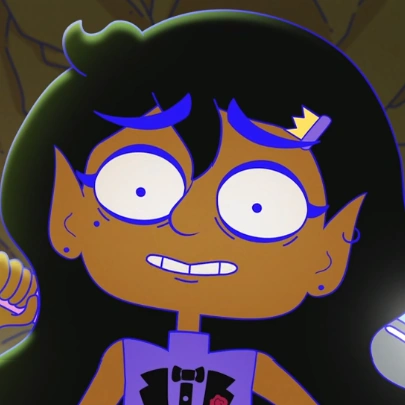
The labrys is the film's central metaphor: a double-headed axe that serves as a symbol of lesbian power. Every lesbian on Clitopolis can summon one — except Saira, to her mothers' disappointment. The film makes the rules of the labrys explicit: it only appears when its wielder believes in herself. Saira can't summon one because she's spent her whole sheltered life anxious, self-critical and dependent on other people's approval.
Blade's "training" works because it's really about self-compassion — Blade helps Saira learn to be kind to herself, which is what finally lets the labrys appear. When Saira hands it over to the Maliens and then loses it the moment Kiki rejects her, the film is showing that external validation was never the source of her power. The labrys returns the moment Saira stops seeking approval and decides she's worth fighting for.
Why the Chick Magnet Fails
The "chick magnet" is the Maliens' master plan: a machine powered by Saira's labrys that would supposedly make them irresistible to women. The joke — and it's the whole point — is that the machine doesn't fail because it's broken. It works perfectly. It gives them exactly what they wanted: attention. And the attention doesn't fix anything, because the problem was never that women weren't paying attention to them. The Maliens built their entire identities around a thing they didn't actually need.
The film treats them with a surprisingly soft touch for villains: instead of being destroyed, they're allowed to realise they "overvalued their desire for attention from women" and pivot to loving each other. The throuple ending is played completely straight — and it's one of the reasons the film's finale stood out to critics.
Why Kiki Says No
Kiki's refusal to get back together with Saira is the film's most mature decision. The movie spends its whole runtime building toward a rescue, and the audience — and Saira — expect the classic happy ending: rescue the princess, get the girl. Kiki's rejection reframes the entire story. Saira's quest was never actually about winning Kiki back; it was about becoming someone who could stand on her own.
It also keeps Kiki from being a plot reward. She's a bounty hunter with her own life and her own reasons — "too needy" was a genuine incompatibility, not a villain motivation. The film lets Saira end the story single, happy and self-sufficient, which is a far more unusual choice than another on-screen kiss.
The Credits Reveals
The post-credits montage is where the film cashes in its character arcs:
- Saira is more social. She's seen connecting with people instead of hiding — the direct payoff of her growth.
- Family therapy. Saira goes with her mothers to see Blade — who turns out to have survived her decapitation without explanation — for family therapy. The attempted murder victim becomes the family therapist. This is the film's best deadpan joke.
- Willow's hit album. Willow releases an album about Saira, confirming that their brief romance left a real mark.
- New adventures with the Ship. The Problematic Ship is now an ally — and a friend — as Saira heads off on new adventures, explicitly setting up the possibility of more stories.
What It All Means
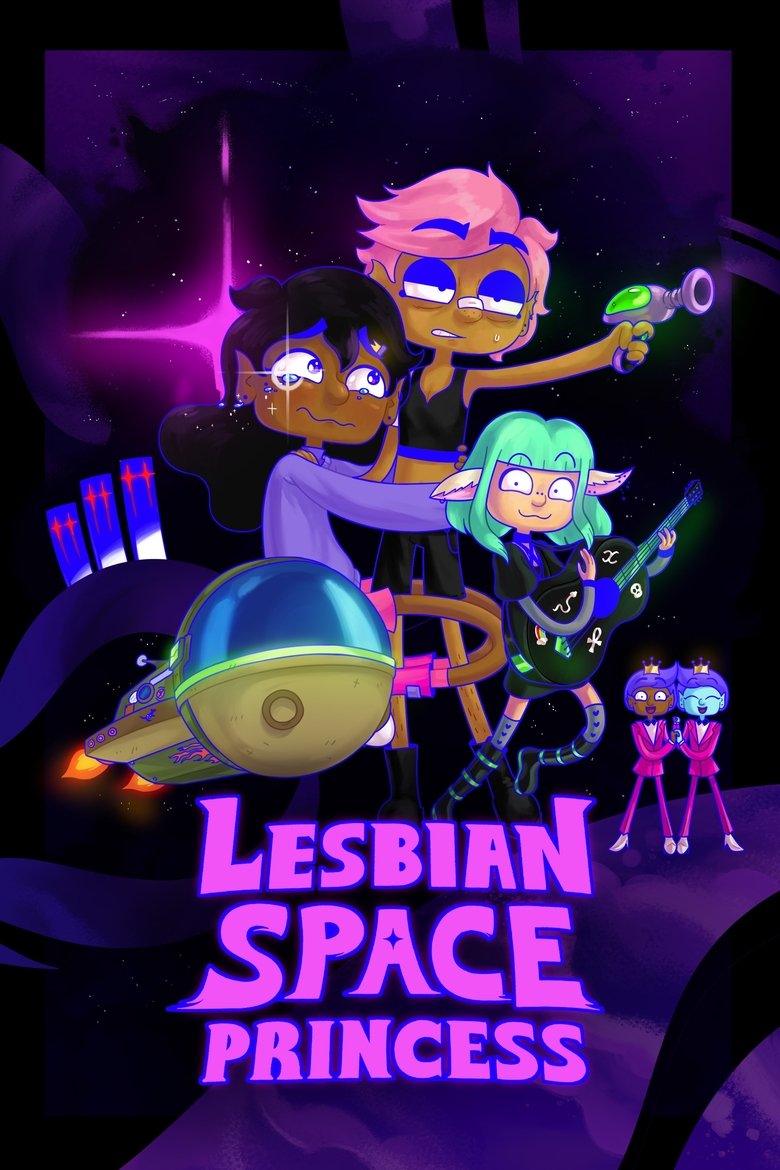
Emma Hough Hobbs and Leela Varghese have said the story is drawn from their own lives and is about the importance of self-worth and self-love — feeling free to take up space, and being comfortable with your own company. Every major beat of the ending maps to that thesis:
- The labrys only works when Saira believes in herself — self-worth is the source of power.
- Kiki's rejection teaches Saira that she doesn't need a partner to be complete — being comfortable with your own company.
- The Maliens' chick magnet failing teaches the same lesson to the villains — validation from others can't fill a hole inside yourself.
- Even Blade gets a second chance — the film's world believes in growth for everyone, not just the hero.
Ending FAQs
| Question | Answer |
|---|---|
| Does Saira end up with anyone? | No. Saira ends the film happily single. Kiki turns her down, and Willow has moved on — the ending is about Saira loving herself. |
| Is Blade actually dead? | No. Blade is decapitated in the second act but appears alive in the credits, running family therapy sessions with Saira's family. |
| Is there a post-credits scene? | The credits themselves contain a montage of reveals (Saira socialising, family therapy, Willow's album, new adventures with the Ship). There's no separate scene after the credits finish. |
| Will there be a sequel? | Nothing has been announced. The credits montage leaves room for more adventures, but no sequel has been confirmed. |
| Why did the labrys disappear? | The labrys only exists when Saira believes in herself. When Kiki rejected her, her self-doubt made it dematerialise; it returns when she overcomes that doubt. |